4 min read

Filing for Divorce in Alabama: A Step-by-Step Paperwork Guide

Filing for Divorce in Alabama: A Step-by-Step Paperwork Guide

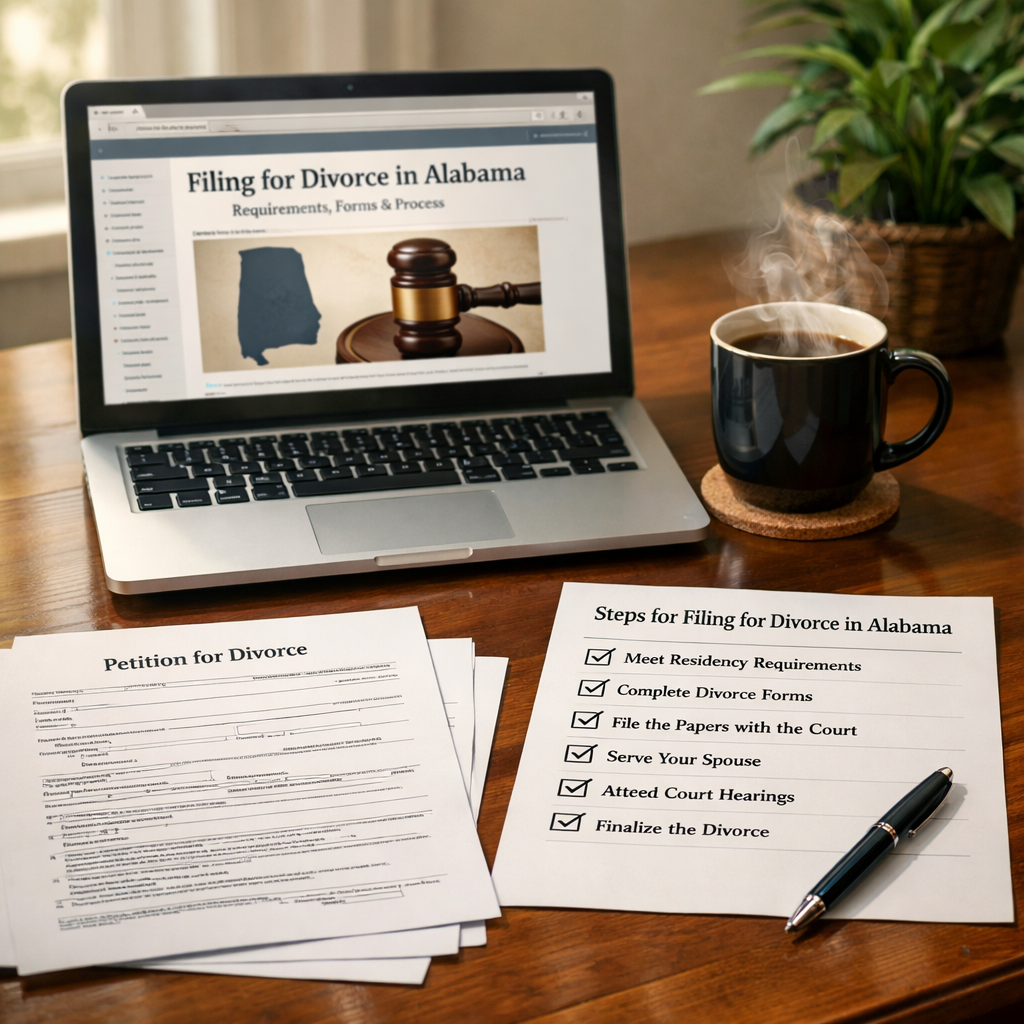
The hardest part of starting a divorce is often deciding to start. The paperwork itself is actually a fairly clear set of steps, even though the documents can look intimidating. This guide walks through what is required to file for divorce in Alabama, in plain language, in the order things actually happen.

Step 1: Confirm you can file in Alabama

Before any paperwork, you need to know that an Alabama court has authority to grant your divorce. The basic rule is one of two things must be true. Either your spouse lives in Alabama, or you have lived in Alabama for at least six months. For more detail, see our explainer on the Alabama divorce residency requirement.

Step 2: Decide where to file

Alabama divorces are filed in the circuit court of a specific county. The case is filed in the county where you live or where your spouse lives. If both spouses live in Alabama in different counties, either county works. Once a case is filed in a county, that is the court that will handle it from start to finish.

Step 3: Prepare the complaint for divorce

The case officially begins when you (the plaintiff) file a complaint for divorce with the circuit court. The complaint is the document that asks the court to grant the divorce and lists what you are asking the court to order. It contains:

Identifying information for both spouses (full legal names, addresses, dates of birth).

The date and place of marriage.

Information about any minor children, including their names and birth dates.

The grounds for divorce. Alabama allows both no-fault grounds (incompatibility of temperament, irretrievable breakdown of the marriage, or voluntary separation of more than two years) and fault-based grounds (such as adultery, abandonment for at least one year, imprisonment, and habitual drunkenness or drug use).

The relief you are requesting. This is the heart of the complaint. It is where you ask the court to grant the divorce, divide property and debt, decide custody and a parenting schedule if applicable, set child support, address alimony, and any other orders you need.

Step 4: Gather supporting documents

Most Alabama courts require additional documents along with the complaint. The specific list varies by county and by your situation, but commonly includes:

A summons, which is the document that officially notifies your spouse the case has been filed.

A vital statistics form (the certificate of divorce that the state's vital records office uses).

If you have minor children, a CS-41 income affidavit from each parent and a CS-42 child support calculation form using Alabama's child support guidelines.

If you have minor children, a parenting plan or, in many counties, a draft of the parenting plan you are proposing.

An affidavit of substantial hardship if you cannot afford the filing fee and are requesting a waiver.

Your attorney handles the assembly of these documents, but the underlying information (incomes, account values, parenting schedule) has to come from you.

Step 5: Pay the filing fee

Filing fees in Alabama are set by each county and generally run a few hundred dollars. If you genuinely cannot afford the fee, you can ask the court to waive it by filing an affidavit of substantial hardship. The judge reviews and decides.

Step 6: Serve your spouse

After the case is filed, the other spouse (the defendant) has to be officially notified. This is called "service of process." There are a few ways it can happen:

Waiver of service. In an uncontested or cooperative case, the defendant signs a document acknowledging they received the paperwork. This is the simplest path.

Service by sheriff. The sheriff in the county where the defendant lives delivers the paperwork.

Service by private process server. A licensed process server is hired to deliver the papers.

Service by certified mail. Available in some situations.

Service by publication. Reserved for cases where the spouse cannot be located after a diligent search.

Step 7: Wait for the response

Once your spouse is served, they generally have 30 days to file an answer. The answer states whether they agree or disagree with what you have asked the court to order. If they do not respond within that window, the case can sometimes proceed by default, though courts often require an additional step to confirm proper service before granting default relief.

Step 8: From here, the path depends on whether the case is contested

If you and your spouse agree on everything, the case proceeds as an uncontested divorce. A settlement agreement is drafted, both spouses sign, and after the 30-day waiting period the judge can sign the final decree.

If there are unresolved issues, the case becomes contested and moves through discovery, often mediation, and potentially trial. We cover the difference in detail in our guide to contested versus uncontested divorce in Alabama.

What to have ready before you walk into an attorney's office

Filing goes faster when you bring the right paperwork to your first meeting. The most useful items are recent federal tax returns (the last two or three years), recent pay records or pay stubs, statements for every bank, retirement, and investment account, mortgage statements and the deed to any real estate, debt statements (credit cards, vehicle loans, student loans), and a list of significant items of personal property. If you have minor children, bring a realistic draft of the parenting schedule you would like to see.

When to talk to an attorney

You can file for divorce in Alabama on your own, but the documents are unforgiving. A small error in the complaint or in the settlement agreement can come back years later as a genuine problem. For any case involving children, retirement accounts, real estate, alimony, or significant debt, working with a family law attorney is worth the cost.

At Summit Family Law, we help clients across Alabama from our Birmingham and Huntsville offices. If you are getting ready to file and want to talk through what it involves, contact our team to schedule a consultation. For the full picture of every stage from filing to final decree, see our complete guide to the Alabama divorce process.

This article provides general information about filing for divorce in Alabama and is not legal advice. Each case turns on its own facts and county procedures can vary. For advice about your specific situation, speak with a licensed Alabama family law attorney.

Get Divorce Help Today

Get advice from a qualified legal professional.

Schedule a Consultation
Contested vs. Uncontested Divorce in Alabama: What's the Difference?

Contested vs. Uncontested Divorce in Alabama: What's the Difference?

Most people facing a divorce in Alabama eventually run into the same fork in the road: is your divorce contested or uncontested? The difference...

Read More
Alabama Divorce Residency Requirements Explained

Alabama Divorce Residency Requirements Explained

Before an Alabama court can grant a divorce, it has to have authority over the case. That authority comes down, in most situations, to where the...

Read More

Does Divorce Have to Be Filed in the Same State as the Marriage?

Which State Does the Divorce Have to be Filed in? Once you decide you are ready to get divorced, you may have many questions about the process. One...

Read More