Divorce and Family Law in Huntsville, Alabama: What to Expect
Alabama law applies the same way across the state, but the experience of a divorce or custody case in Huntsville is shaped by Madison County's...
4 min read
Charlotte Christian
:
June 2, 2026
Family law is state law, but it lives in your county. The same Alabama statutes apply across the state, and yet the experience of going through a divorce or a custody case in Birmingham is shaped by Jefferson County's specific courts, judges, and local procedures. This guide is for people considering or beginning a family law matter in the Birmingham metro. It covers what is different about Birmingham, how the local courts handle these cases, what tends to be standard practice here, and how to make decisions with a realistic picture of the road ahead.
Birmingham sits in Jefferson County, the most populous county in Alabama. Jefferson County has a Family Court that handles divorces, custody cases, child support matters, and other family law issues. The Family Court has multiple judges, and which judge gets your case is assigned when the case is filed.
Jefferson County is unusual among Alabama counties in that it has two courthouses with civil jurisdiction: the main downtown courthouse and the Bessemer Cutoff Courthouse. Cases are filed in the courthouse that has jurisdiction over your address, which depends on where in Jefferson County you live. If you are unsure which courthouse covers your address, the clerk's office can tell you, or your attorney will know.
If you live in one of the Birmingham metro suburbs that falls in Shelby County (parts of Hoover, Pelham, Alabaster, Helena, and others), your case is filed in Shelby County, in Columbiana. The substantive law is the same, but the courthouse, the judges, and some of the local procedures are different.
Whatever county your case is in, the rules that govern the substance of a divorce or custody case in Alabama are the same. The waiting period for a divorce is 30 days from the filing of the complaint. The grounds for divorce are the same. The best interest of the child standard governs custody. The Rule 32 child support guidelines apply. Property is divided under equitable distribution principles. For the statewide overview of every stage of an Alabama divorce, see our complete guide to the Alabama divorce process.
Jefferson County's Family Court handles a high volume of cases. That has real consequences. Hearings get set further out than in some smaller counties. Mediation is strongly encouraged and frequently mandatory before trial. Standard pretrial orders move cases along a defined timeline. The pace is workable, but it rewards parties who are organized and responsive.
In contested cases in Jefferson County, mediation is the norm. Most cases reach mediation before trial, and a large share settle there. Birmingham has a deep pool of experienced mediators (often retired judges or veteran family law attorneys), and a good mediation can resolve a case that would otherwise take months to try.
Jefferson County has standing orders that apply automatically when a divorce is filed. These typically include restraints on transferring or hiding assets, restraints on relocating children, and rules about cooperation. The specific terms can change over time, so always confirm current orders with your attorney, but the principle is consistent: certain protections kick in the moment the case is filed.
Custody cases in Birmingham are shaped by the realities of the metro: long commutes, school zones that cross municipal lines, and a deep mix of public, magnet, and private schools. Parenting plans that work in Birmingham usually anticipate these realities. Plans that treat school logistics as an afterthought tend to break down within months.
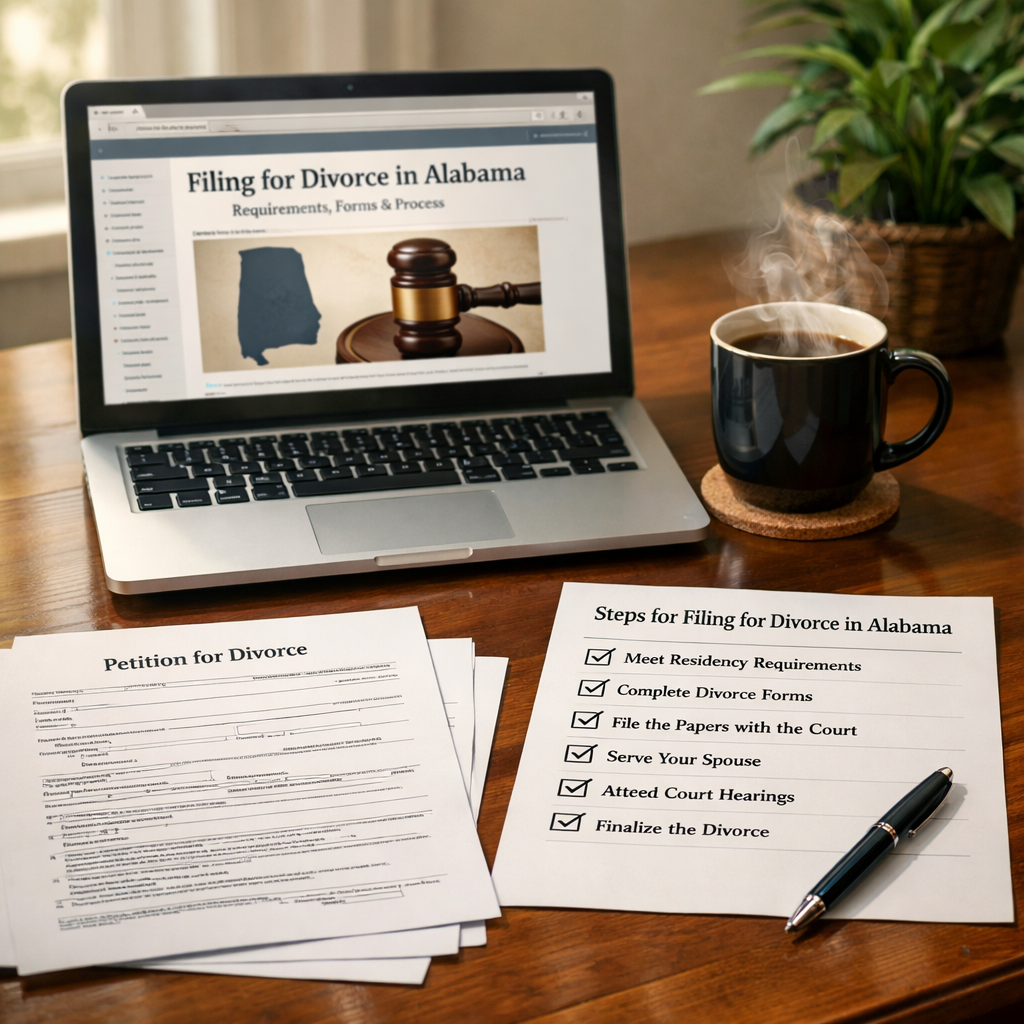
The process tracks the statewide flow, but with local color.
Filing. The complaint is filed in Jefferson County Circuit Court at the courthouse that has jurisdiction over your address.
Service. Your spouse is notified, either through a waiver of service in cooperative cases or through the sheriff or a private process server in contested ones.
Temporary orders. If the parties cannot agree on what should happen while the case is pending (who stays in the home, a temporary parenting schedule, temporary support), the court can hold a temporary hearing.
Discovery. Both sides exchange financial and other information through written discovery and, in contested cases, depositions.
Mediation. In nearly every contested case, the court directs the parties to mediation. A neutral mediator works with both sides to try to reach a complete settlement.
Settlement or trial. If mediation produces a settlement, it gets written up and submitted to the court. If not, open issues go to trial in front of the judge.
Final decree. Once everything is resolved by agreement or by the court, the judge signs the final decree of divorce.
A first meeting goes faster and produces better advice when you arrive prepared. Useful items to gather include: recent tax returns, recent pay records, statements for every financial account, the mortgage statement and deed for any real estate, debt records, and if there are children, the current school and activity schedule. If you anticipate a fight, also bring notes on the issues you expect to be disputed and any communications that bear on them.
We work with clients across the Birmingham metro from our Birmingham office. The metro covers a lot of distinct communities, each with its own character: Mountain Brook, Vestavia Hills, Hoover, Homewood, Trussville, Pelham, Alabaster, Helena, Bessemer, and the city of Birmingham itself, among others. Where you live can affect which courthouse hears your case (Jefferson County versus Shelby County), but it does not change our approach: every client gets careful, individualized work.
The most common matters we handle for Birmingham clients fall into a few groups:
Divorce, including both uncontested cases where the spouses have agreed and contested cases where the court is involved in resolving disputes.
Child custody, both as part of a divorce and in standalone cases between parents who were never married.
Alimony and child support, including initial determinations and later modifications.
High-asset and professional divorce, which is a meaningful share of cases in the Birmingham metro given the area's professional and business community.
Modifications of existing orders, when life circumstances have meaningfully changed since the original decree.
The most valuable conversation in a family law matter is often the first one. An early consultation with a Birmingham family law attorney can clarify whether you have grounds for the orders you need, what the realistic timeline is, what a settlement might look like, and what to do (and not do) in the days and weeks ahead.
At Summit Family Law, we represent Birmingham metro families from our office in Birmingham. If you are considering a divorce, facing a custody question, or needing to modify an existing order, contact our team to schedule a consultation. To learn more about our Birmingham practice and how we work, see our Birmingham office page.
This article provides general information about divorce and family law in Birmingham, Alabama, and is not legal advice. Each case turns on its own facts and local court procedures change over time. For advice about your specific situation, speak with a licensed Alabama family law attorney.
Alabama law applies the same way across the state, but the experience of a divorce or custody case in Huntsville is shaped by Madison County's...
Most people facing a divorce in Alabama eventually run into the same fork in the road: is your divorce contested or uncontested? The difference...
Few legal matters carry the weight of a custody case. Whether you are facing a divorce, working out custody between parents who were never married,...